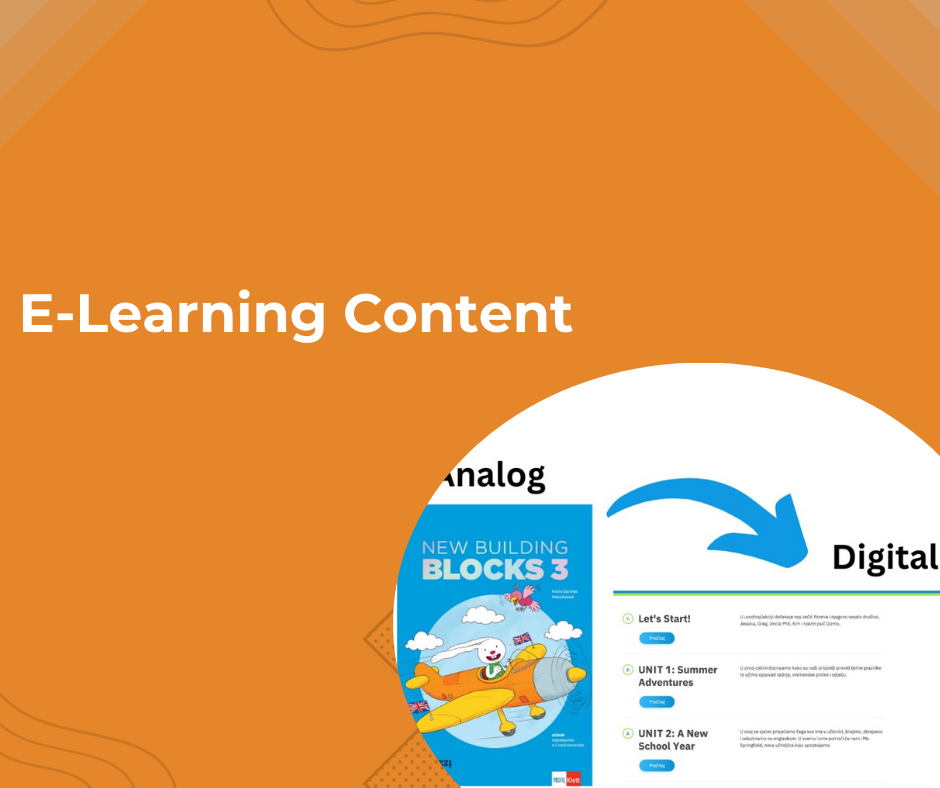
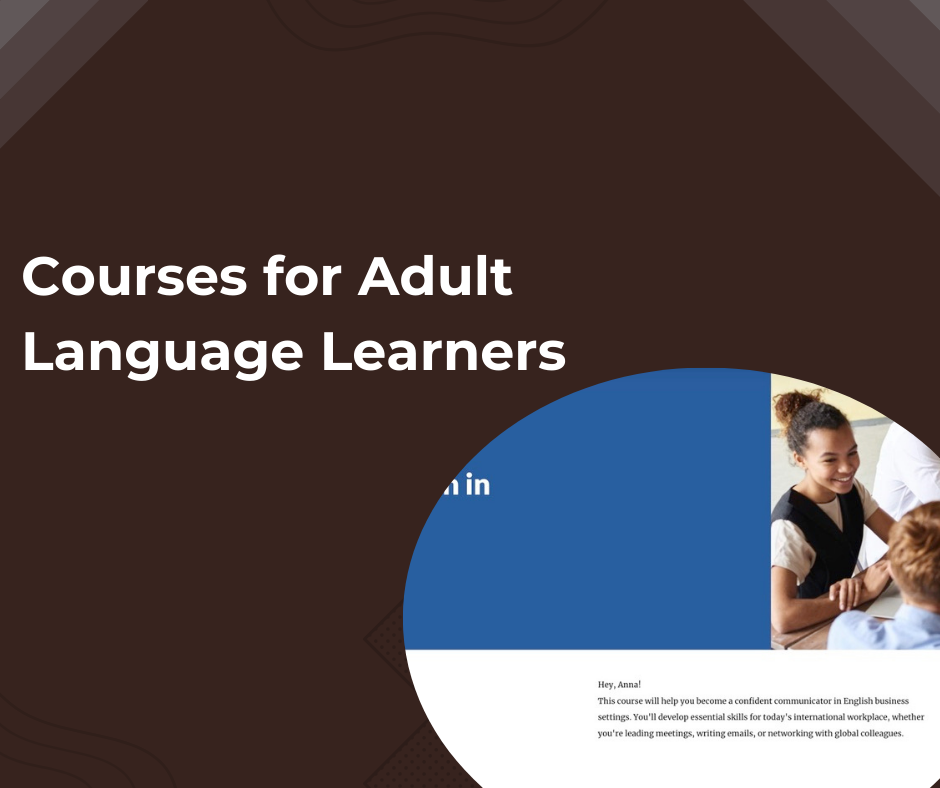
At the beginning of 2026, I transitioned into a global instructional design team within the organization. With this move, my focus shifted primarily toward designing and scaling e-learning formats for a global audience. This Heart Failure course was one of the very first projects I owned in this new role and also the first in the series of courses presenting this topic.
Feel free to explore the course yourself to experience the flow firsthand—and perhaps even pick up a few new insights about heart failure along the way!
Responsibilities: Instructional design Target audience: healthcare professionals Tools used: Articulate Rise, BioDigital, Natural Readers Employer: Abiomed, Johnson and Johnson
Problem Statement
Initially, the training relied on an existing video recording of a lecture introducing heart failure. However, this format fell short—it was passive, lengthy, and did not match the needs of our clinical audience. The challenge was to take this raw video content and completely transform it into an engaging digital course.
Process
The development process followed the structured project stages we established in Wrike, taking the course through Course Discovery, Course Build, and Review and Feedback.
Note: Following these stages, the course underwent corporate compliance and clinical approval workflows to ensure medical accuracy. For brevity, those specific regulatory steps are not detailed below.
Step 1: Course Discovery
SME alignment & scoping: I worked with a Subject Matter Expert (SME) to review the existing video recording and identify the core takeaways. Since this was the launch course of the series, we limited the scope to a high-level overview of heart failure basics, saving advanced, granular clinical details for subsequent modules.
Defining objectives: I transformed the general lecture concepts into learning objectives. This ensured this course focused strictly on what learners must grasp to successfully navigate the more complex upcoming courses.
Step 2: Course Build
Content chunking
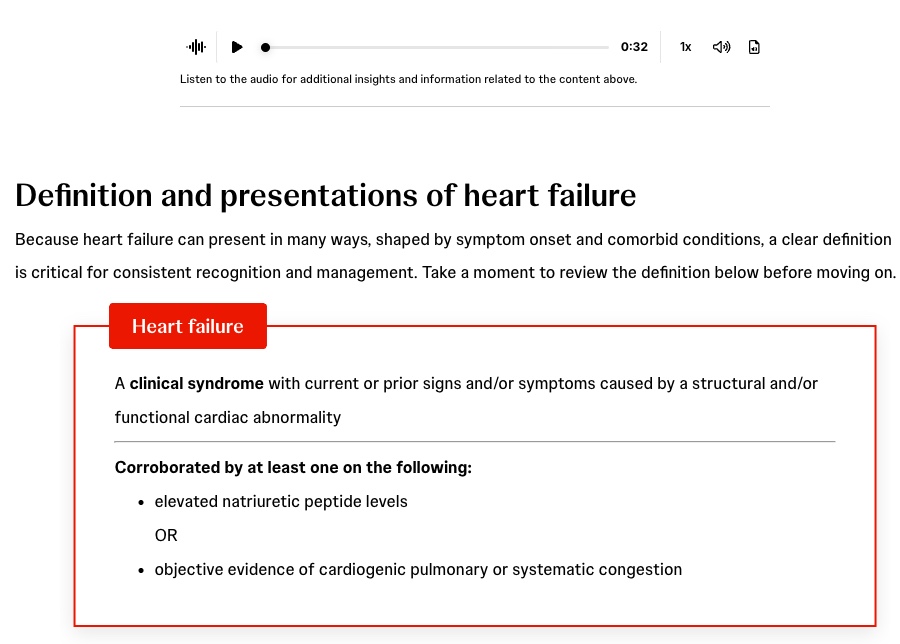
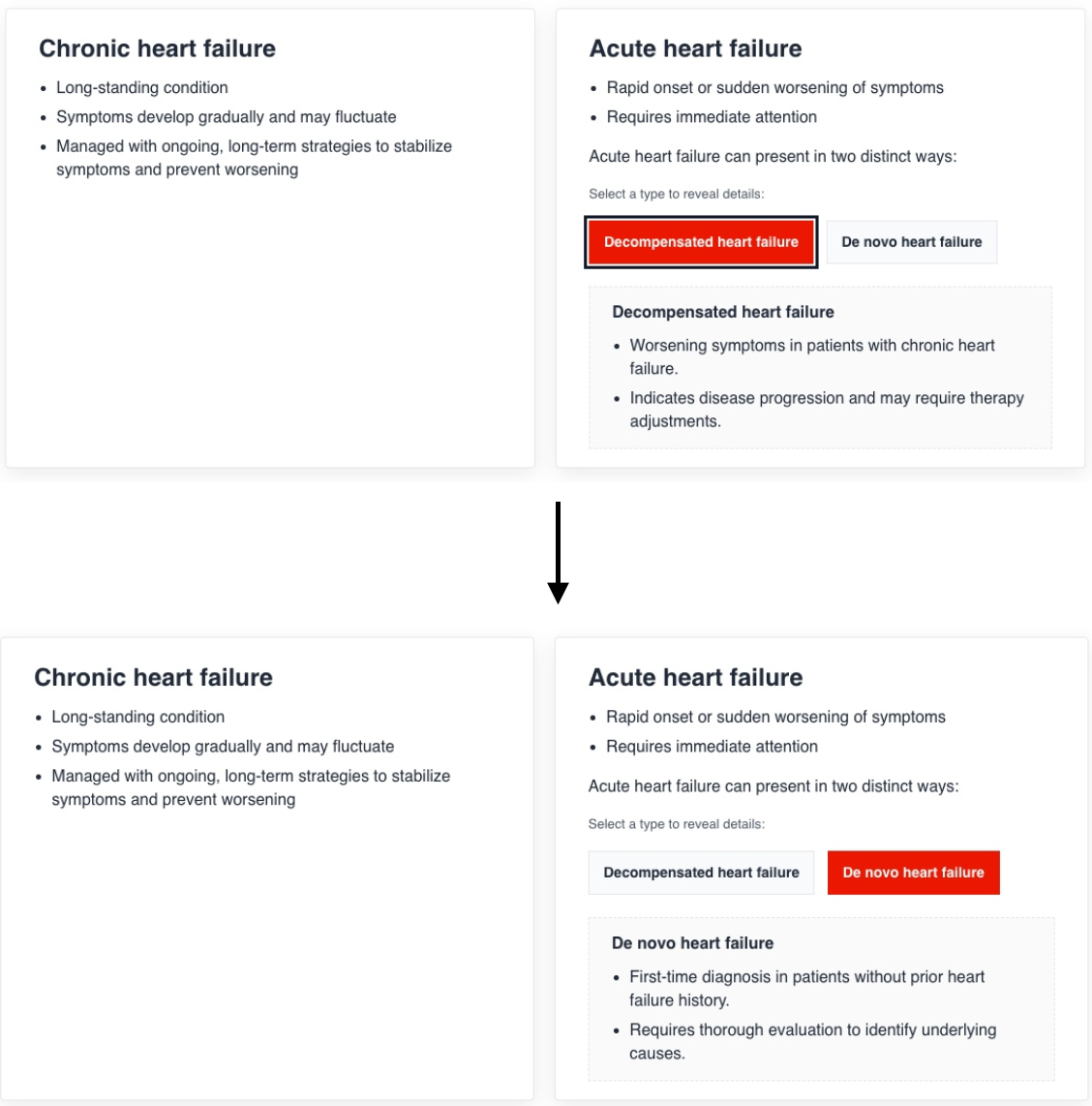
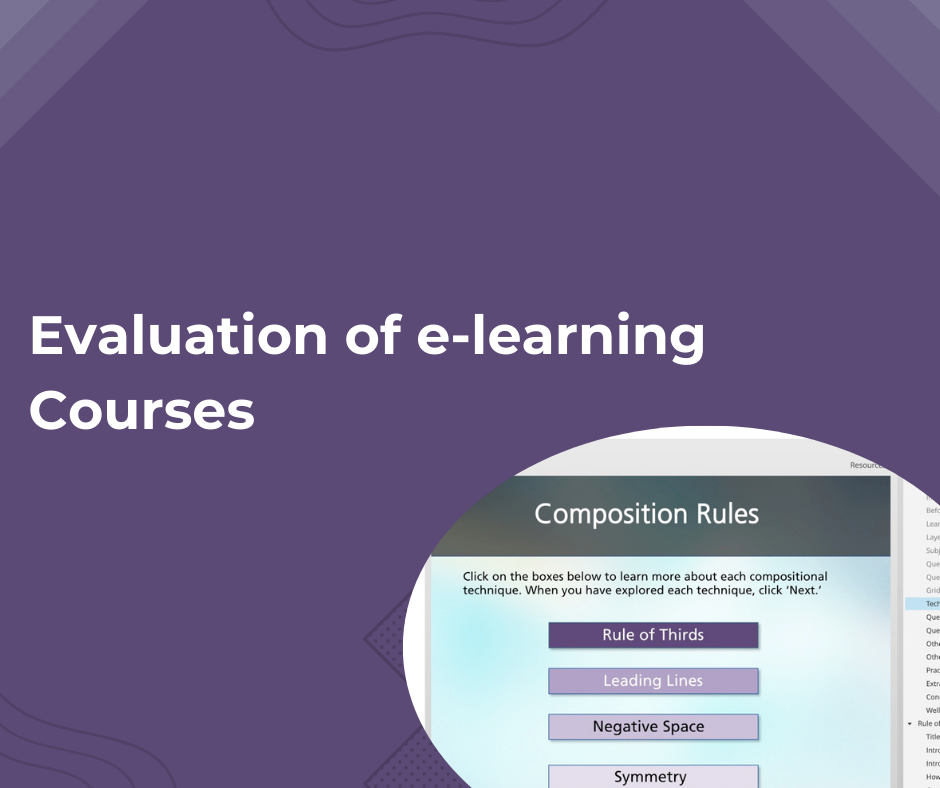
I deconstructed the lengthy video lecture into a modular, click-through framework. This involved standard ID work in Articulate Rise—organizing the narrative flow and utilizing native blocks like accordions, tabs, and flashcards to transform passive viewing into an active learning experience.
Going beyond native Rise blocks (with a little help)
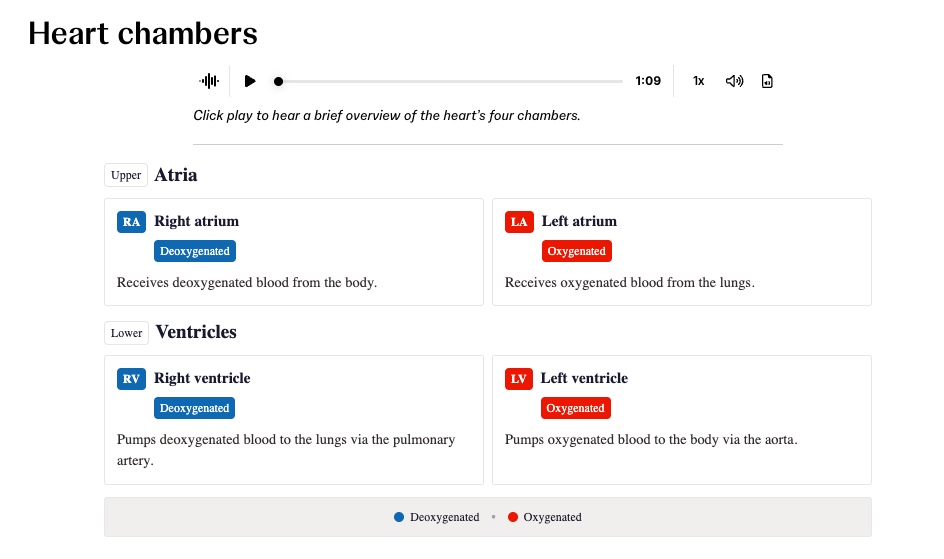
While Rise is fantastic for responsive design, its default block library can sometimes feel visually restrictive. To elevate the learning experience and break the monotony of standard layouts, I wanted to introduce custom visual elements. This required custom coding a few components.
Full disclosure: I am far from a coder. If you ask me to write raw JavaScript or CSS from scratch, you’ll just get a blank stare.
To bridge this gap safely, our team built a shared internal library of custom code snippet templates. Using those templates as a baseline, I teamed up with AI to customize the code for several specific multimedia blocks.
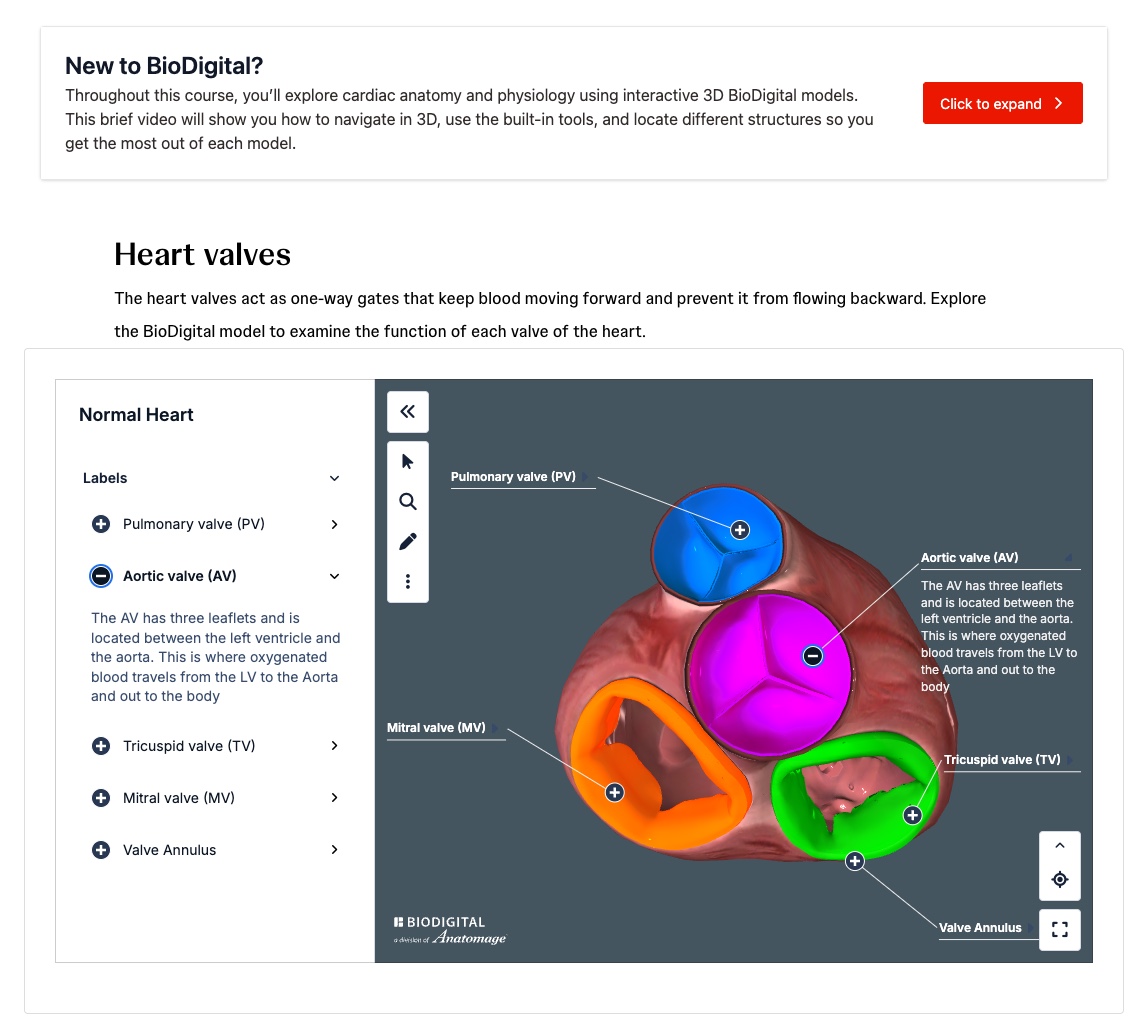
Explaining cardiac anatomy and the direction of blood flow is notoriously challenging in a standard text-and-image format. Articulate Rise’s native blocks don’t offer an elegant, fluid way to show this. Again, we teamed up to create a better visual solution.
Leveraging 3D interactivity for complex anatomy
When I joined Abiomed, I had to complete our clinical training myself. Having zero medical or clinical background, I quickly hit a cognitive wall with the dense presentations.The turning point for me was using BioDigital 3D animations—seeing a beating heart and fluid blood flow made complex anatomy instantly click.
This firsthand experience shaped my design strategy: I now strategically embed BioDigital assets and interactive videos to simplify complex spatial concepts and provide immediate clarity for our learners.
Step 3: Review and Feedback
Instructional design peer review: I leveraged our team's established peer review process, where we routinely evaluate each other's work to ensure a high standard of user experience, flow, and pedagogical soundness for all courses.
Clinical SME validation: Finally, I shared the refined course with our clinical SME to verify medical accuracy and ensure the high-level concepts correctly aligned with current heart failure protocols.
Learnings and Key Takeaways
This was one of the first courses I developed after our team transitioned from Articulate Storyline to Rise—and it was absolutely a change for the better. The responsive layout and smoother development cycles allowed us to build much more dynamically.
Even with better tools, translating heavy clinical topics is always a creative challenge. Building a shared pool of coding templates with my ID team taught me the value of working smarter, not harder. Leveraging collective templates and AI allowed us to easily push past standard boundaries.
Most importantly, this project reinforced that we must always keep the true learning value and cognitive processes at the heart of our solutions. Custom code and 3D visuals should only be used to simplify complex concepts, never just to add a flashy element for the sake of it.